Ten things most Whitby visitors never find
13 June 2026
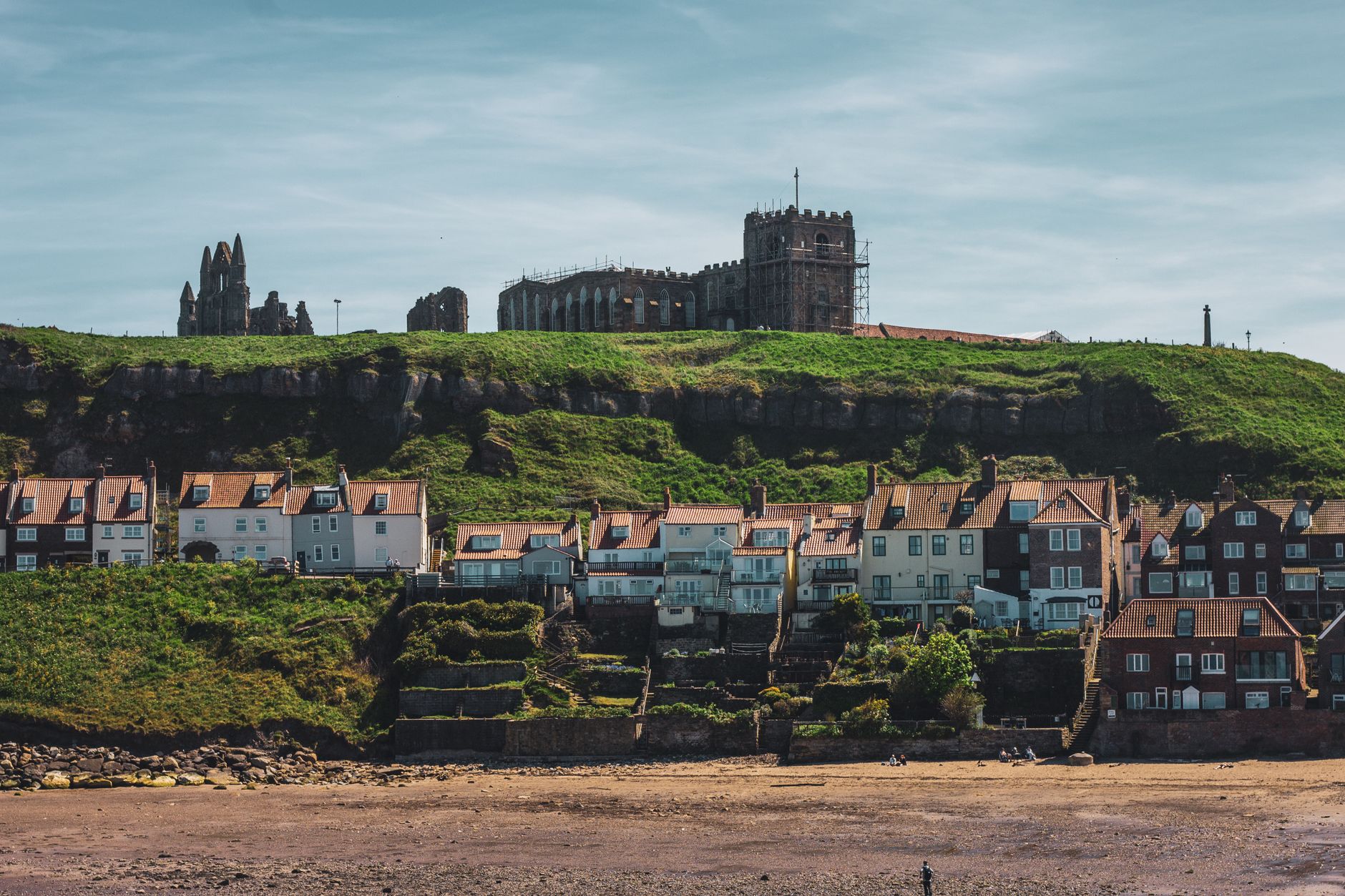
The abbey is spectacular. Go. Climb the steps, pay your entrance, stand in the nave and let the wind do its work. But when you come back down, most visitors turn left to the fudge shops and miss the town entirely. Here are ten things our walking-tour guides show people who thought they'd already seen Whitby.
-
The coffin rests on the 199 steps. Those broad wooden platforms every few flights aren't viewpoints — they're where pallbearers set the coffin down on the climb to St Mary's churchyard. Look for the flat rails.
-
The Caedmon Cross. At the top of the steps, a Victorian cross honouring the seventh-century herdsman of Whitby who became the first named English poet. He worked where you're standing.
-
The whalebone arch's third incarnation. The current arch on the West Cliff is from a bowhead whale, gifted from Alaska in 2003 — the third to stand there since 1853. The town has never let the memory of the whaling trade lapse.
-
Tin Ghaut. Almost all of Whitby's ghauts — the narrow yards running from Church Street to the water — were cleared in the 1950s. Find the surviving openings and you're looking at the medieval street plan.
-
The scoria bricks. The blue-black bricks paving parts of the old town are furnace slag from Teesside ironworks, shipped as ballast. The industrial North East, underfoot.
-
Fair-lead grooves on the pier stones. Deep rope-worn channels cut into the sandstone of the West Pier, made by a century and a half of mooring lines.
-
The Screaming Tunnel on the East Side — properly the Spital Bridge shipyard tunnel, and worth finding for the echo alone.
-
Argument's Yard. Yes, it's a real family name; yes, everyone photographs the sign; almost no one walks in. Do — it's one of the last complete yards.
-
The jet outcrops at Saltwick. At low tide you can still find sea-washed jet on the shore below the abbey — the raw material of the trade that employed 1,500 people here in 1870.
-
St Mary's box pews. Inside the church at the top of the steps: a Georgian interior of white-painted box pews and galleries, lit by ships' lamps, unlike any church you have ever stood in.
All ten are on our Old Town walking tour, which runs Wednesdays and Saturdays from the museum door.